Hollywood loves a redemption story almost as much as it loves a good villain, and nothing captures the industry’s imagination quite like an actor clawing their way back from irrelevance, scandal, or simple bad luck. These comeback narratives resonate because they mirror something universal: the idea that a setback doesn’t have to be permanent, that reinvention is possible even after the world has written you off. Some of these turnarounds happened decades ago and still get referenced at every awards season. Others are unfolding right now, in real time, proving that the comeback story is far from a relic of old Hollywood.
What follows is a look at some of the most compelling career revivals in film history, ranked loosely by cultural impact, degree of difficulty, and how thoroughly each actor rewrote their own narrative. Some ended in Oscar gold. Others simply reminded audiences why they fell in love with a performer in the first place.
Brendan Fraser and The Whale

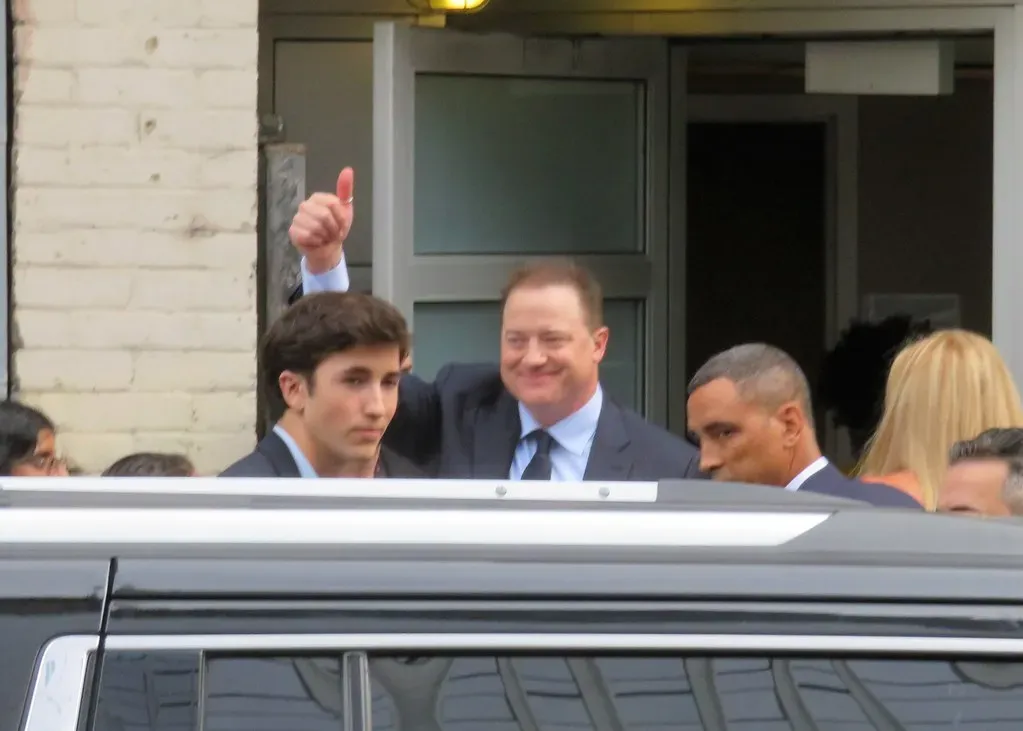
Few comebacks felt as emotionally earned as Brendan Fraser’s. After dominating the late 1990s and early 2000s as the star of The Mummy trilogy and George of the Jungle, Fraser largely vanished from major studio films for roughly a decade. His best actor victory capped a comeback for one of Hollywood’s former leading men who had admitted he was left “in the wilderness” for a decade. The role that changed everything was Charlie, a reclusive, morbidly obese English professor in Darren Aronofsky’s The Whale.
The “Whale” star won Best Actor at the 2023 Academy Awards for his turn as a reclusive English professor grappling with his obesity and will to live. The physical and emotional toll of the role was immense, and by the time Fraser accepted his Oscar, the moment felt less like a typical awards win and more like a genuine catharsis for an actor who had quietly endured personal hardship out of the public eye. Fraser’s performance in “The Whale” earned him an Oscar nomination and a Screen Actors Guild Award for best actor, and later that year, he appeared in Martin Scorsese’s “Killers of the Flower Moon,” proving that his prestige comeback was no one-off.
Ke Huy Quan and Everything Everywhere All at Once


Ke Huy Quan’s story is perhaps even more remarkable because he never really had a first act as an adult performer to fall back on. He rose to fame before his teenage years, playing Harrison Ford’s sidekick in 1984’s “Indiana Jones and the Temple of Doom” and appearing in 1985’s “The Goonies,” but quit acting shortly after because he found there weren’t many substantial film roles for Asian people. For nearly four decades, he worked largely behind the camera, his acting career essentially frozen in amber.
Then came Everything Everywhere All at Once. He didn’t return to acting until 2021 in “Everything Everywhere” as Waymond Wang, the goofy husband to Michelle Yeoh’s multiverse-straddling laundromat owner. The film became a genuine phenomenon, and Quan’s journey culminated in an Oscar win. “I was about to lose my health insurance,” Quan said, referencing the anxious wait before the film’s delayed release finally paid off. His speech, in which he described his path from a refugee camp to Hollywood’s biggest stage, remains one of the most quoted Oscar moments of the decade.
Mickey Rourke and The Wrestler


Before Fraser or Quan, there was Mickey Rourke, whose comeback in 2008 set something of a template for how Hollywood mythologizes these stories. Rourke had been a genuine star in the 1980s with films like Angel Heart and Barfly, but a mix of personal turmoil and a detour into professional boxing left his acting career in ruins for over a decade. When he makes a comeback, he makes a helluva comeback, one writer noted, pointing out that for thirteen years the once-superstar had alienated much of the industry.
Darren Aronofsky’s The Wrestler gave Rourke a role that seemed almost purpose-built for his own life story, playing a washed-up fighter chasing one last shot at meaning. The Wrestler had not even opened yet, and already Mickey Rourke had won Best Actor from the Boston and Washington, D.C., critics groups and earned a Golden Globe nomination in that category. He ultimately lost the Oscar to Sean Penn for Milk, but the run itself, a Golden Globe, a BAFTA, and an Academy Award nomination, cemented the performance as one of the defining comeback narratives in modern film history.
Pamela Anderson and The Last Showgirl


Of all the recent comeback stories, Pamela Anderson’s might be the most surprising, if only because so few people expected her to be taken seriously as a dramatic actress after decades of being reduced to tabloid fodder and pin-up imagery. Her turn as Shelly, an aging Las Vegas showgirl, in Gia Coppola’s The Last Showgirl changed that conversation almost overnight. Someone had to say, “Let’s send this script to Pamela Anderson. She’d be perfect,” and so “comeback” isn’t quite the right word for a performance widely regarded as one of the best of the year.
The film premiered to strong buzz, and the accolades followed. The performance earned Anderson her first Golden Globe and Screen Actors Guild award nominations. What makes her story resonate is the layered irony of it all. Like her character Shelly, Anderson began her career as a sex symbol, fostered a passion that went entirely unappreciated, and was dismissed as nothing more than a pretty object before being deemed obsolete. Her performance flipped that narrative on its head, earning genuine critical respect for the first time in a career spanning more than three decades.
John Travolta and Pulp Fiction


By the early 1990s, John Travolta had gone from Saturday Night Fever and Grease stardom to a string of forgettable films that had all but erased him from serious Hollywood conversation. Quentin Tarantino, however, saw something in Travolta that studios had stopped noticing, and cast him as hitman Vincent Vega in Pulp Fiction. The role reintroduced Travolta not just as a working actor but as a cool, dangerous, and unexpectedly funny screen presence, a version of himself audiences hadn’t seen since his disco days.
The film’s success reshaped the rest of Travolta’s career, opening doors to roles in Get Shorty, Face/Off, and a string of late-1990s hits that reestablished him as a bankable leading man. It also cemented Tarantino’s reputation as a director who could resurrect careers almost as a side effect of making great films, a pattern he would later repeat elsewhere in his filmography. Travolta’s Pulp Fiction turn remains one of the clearest examples of a single role completely reversing the trajectory of a fading career.
Matthew McConaughey and the McConaissance

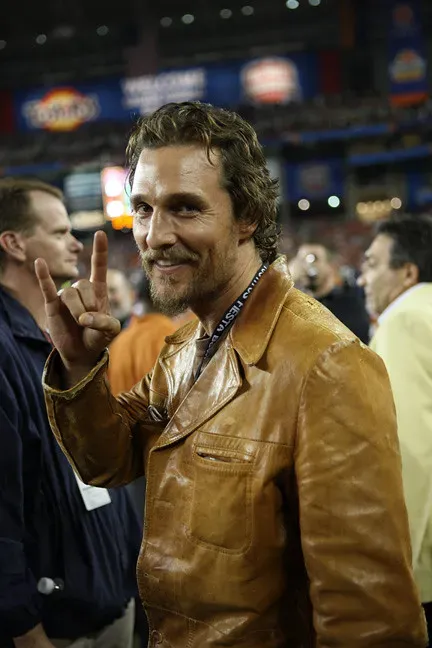
For much of the 2000s, Matthew McConaughey was best known for a run of formulaic romantic comedies that, while commercially successful, did little to showcase any real range. Around 2011, he began deliberately turning down those roles in favor of smaller, riskier projects, a pivot that eventually became known as the McConaissance. Films like Killer Joe, Mud, and The Paperboy signaled the shift, but it was Dallas Buyers Club that sealed the transformation.
His physically demanding performance as an HIV-positive electrician in Dallas Buyers Club earned him the Academy Award for Best Actor, a stunning reversal for an actor who a few years earlier had seemed permanently typecast. The momentum carried into television as well, with his lead role in the first season of True Detective further cementing his reputation as a serious dramatic performer. Few actors have engineered such a deliberate and successful image overhaul, and the McConaissance remains a case study in how strategic role selection can completely redefine a career.
Robert Downey Jr. and Iron Man

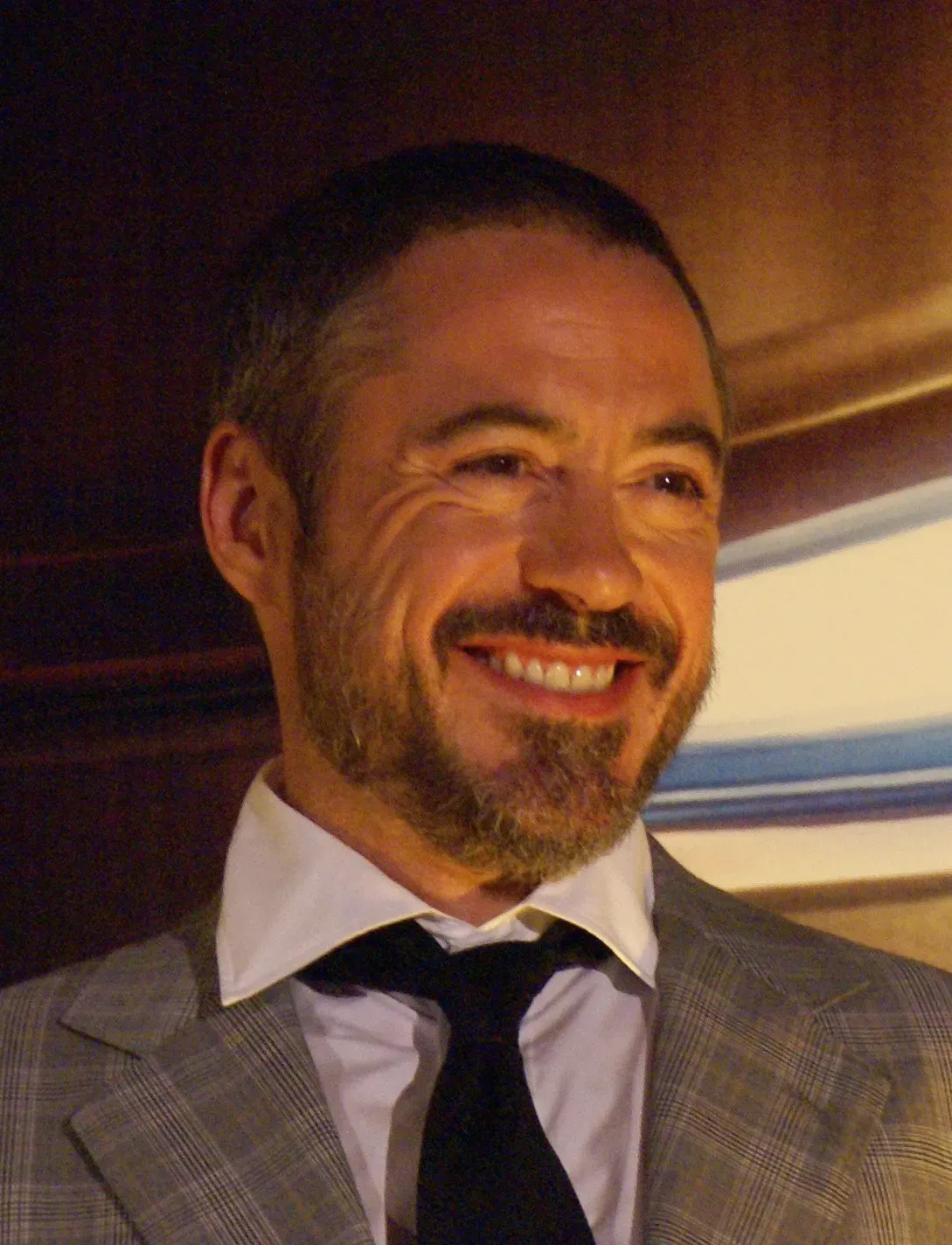
Robert Downey Jr.’s comeback is arguably the most consequential on this list, not just for his own career but for the entire shape of modern Hollywood. Widely regarded as one of the most talented actors of his generation in the 1990s, Downey’s very public struggles with addiction and repeated legal trouble made him effectively uninsurable for studio productions by the early 2000s. Few believed a major studio would take a chance on him again.
Marvel Studios did exactly that, casting him as Tony Stark in 2008’s Iron Man, a decision that was considered a significant gamble at the time given his history. The film’s massive success didn’t just revive Downey’s career, it helped launch the Marvel Cinematic Universe as a dominant commercial force in the industry, a franchise that has since generated tens of billions of dollars at the global box office. Downey went on to become one of the highest-paid actors in the world, and his later Oscar win for Oppenheimer in 2024 only reinforced how completely he had rebuilt his standing in the industry.
Val Kilmer and Top Gun: Maverick


Val Kilmer’s career had quieted considerably by the 2010s, both due to shifting industry tastes and a battle with throat cancer that affected his voice and largely kept him out of major productions. His brief but deeply moving return as Iceman in 2022’s Top Gun: Maverick became one of the most talked-about moments of that year’s biggest blockbuster, using technology to help restore his voice for the scene and leaning into the emotional weight of his real-life health struggles.
The scene worked precisely because it didn’t pretend Kilmer hadn’t changed. Audiences responded to the vulnerability of watching an actor confront his own mortality on screen, wrapped inside a franchise sequel that could have easily played it safe with nostalgia alone instead. It wasn’t a full-blown career revival in the traditional sense, since Kilmer’s health limited further major roles, but it stands as one of the most poignant single-scene comebacks in recent memory, proof that a comeback doesn’t always need to be a lead role to leave a lasting impression.
The Common Thread Behind Every Great Comeback


Looking across these stories, a pattern emerges. The best comebacks rarely happen by accident. They tend to involve a filmmaker willing to take a risk on a performer everyone else had written off, paired with an actor willing to expose something raw and unguarded on screen. Aronofsky did it twice, first with Rourke and later with Fraser. Tarantino did it with Travolta. Marvel did it with Downey. In nearly every case, the comeback role asked the performer to draw on real pain or real history rather than simply play a character at arm’s length.
The other constant is timing. Hollywood’s appetite for redemption stories means that a strong comeback performance often gets amplified by awards season narratives, critics eager to write the underdog story, and audiences who genuinely want to see someone succeed again. That doesn’t diminish the achievement, if anything, it shows how deeply the industry and its audience crave stories of resilience, both on screen and off it.
Hollywood comebacks endure as some of the industry’s most compelling narratives precisely because they remind everyone, performers and audiences alike, that a career’s final chapter is rarely written until it actually happens. As long as there are talented people willing to take one more risk, and directors willing to bet on them, the comeback story isn’t going anywhere.