Michael Jackson, “Billie Jean” (1983)

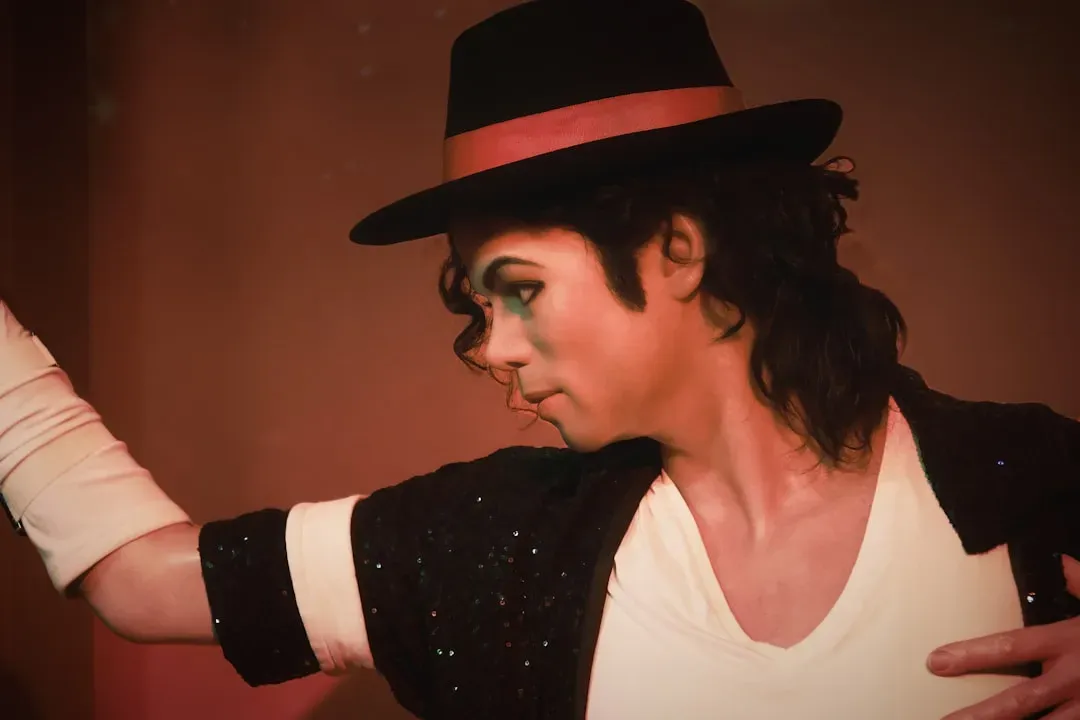
Few songs announce themselves the way “Billie Jean” does, with that bassline sliding in before Jackson even opens his mouth. Michael Jackson’s sleek, suspenseful single from Thriller climbed to No. 1 on the Billboard Hot 100 on March 5, 1983, where it would stay for seven weeks, cementing its place as one of the defining records of the decade. The song’s success wasn’t confined to pop radio either. Jackson became the first artist to top four pop and R&B charts simultaneously, with the song and its parent album dominating multiple Billboard rankings at once.
What really pushed “Billie Jean” into legend, though, happened on television rather than radio. Jackson’s performance of the song on the special Motown 25: Yesterday, Today, Forever is where he debuted the moonwalk, a moment that truly cemented the track’s cultural legend. That single television appearance did as much for the song’s mythology as any chart statistic could, turning a great pop single into a cultural landmark.
Prince, “When Doves Cry” (1984)


Prince built his first chart-topper out of an unusual choice: leaving the bass out entirely. “When Doves Cry,” the lead single from his sixth studio album Purple Rain, became Prince’s first Billboard Hot 100 No. 1 single, staying there for five weeks, and was also a worldwide hit. It wasn’t just a hit single either; according to Billboard, it was the top-selling single of 1984.
The song arrived at the exact moment Prince’s career hit a rare cultural convergence. The Purple Rain soundtrack sold 13 million copies in the US alone, and for a little while in the summer of 1984, Prince had the number one single, album, and film in the United States all at the same time, something nobody had ever done before. Few artists in pop history have managed that kind of simultaneous dominance across three different mediums.
Madonna, “Like a Virgin” (1984)

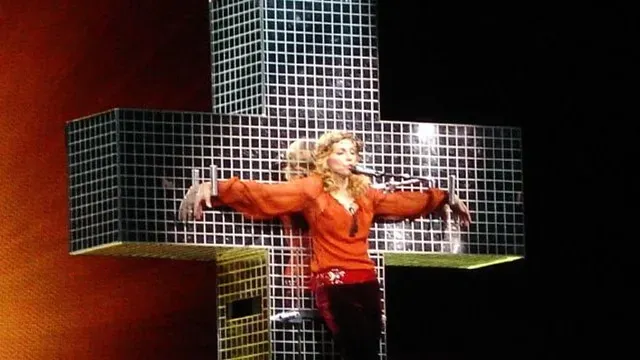
Madonna had released hits before, but nothing that turned her into the cultural lightning rod that “Like a Virgin” did. Its provocative title and her now-iconic wedding dress performance at the first MTV Video Music Awards made the song inseparable from her image as pop’s boldest new provocateur. “Like a Virgin” ended up having the longest run at number one of any song that rose to the top of the Billboard Hot 100 during 1984, spending two weeks there at the end of the year before returning for another four weeks to begin 1985, six weeks total.
That chart longevity mattered, but the video and the persona around the song mattered just as much. Madonna understood, earlier than most of her peers, that a song’s life on MTV could be just as important as its life on the radio. The track set a template she would follow for the rest of the decade: pair a hook with a provocation, and let the culture argue about it while the record climbs the charts.
Cyndi Lauper, “Girls Just Want to Have Fun” (1983)


Lauper’s breakout single turned what was originally written as a somewhat different kind of song into an anthem of female independence, thanks largely to her reworking of the lyrics and her unmistakable vocal delivery. Released in 1983 from her debut album She’s So Unusual, it became one of the defining feminist pop statements of the era without ever sounding like a lecture. The colorful, chaotic music video, full of thrift-store fashion and unapologetic weirdness, gave MTV another visual template to run alongside Madonna’s and Jackson’s.
What made the song endure wasn’t just its chart run but how completely it captured a certain strand of eighties optimism. It became shorthand for a whole aesthetic, quirky, bright, unbothered by convention, that ran parallel to the decade’s flashier arena rock and synth-pop. Decades later it still gets pulled out for movies and commercials whenever a scene needs an instant shot of retro joy.
a-ha, “Take On Me” (1985)

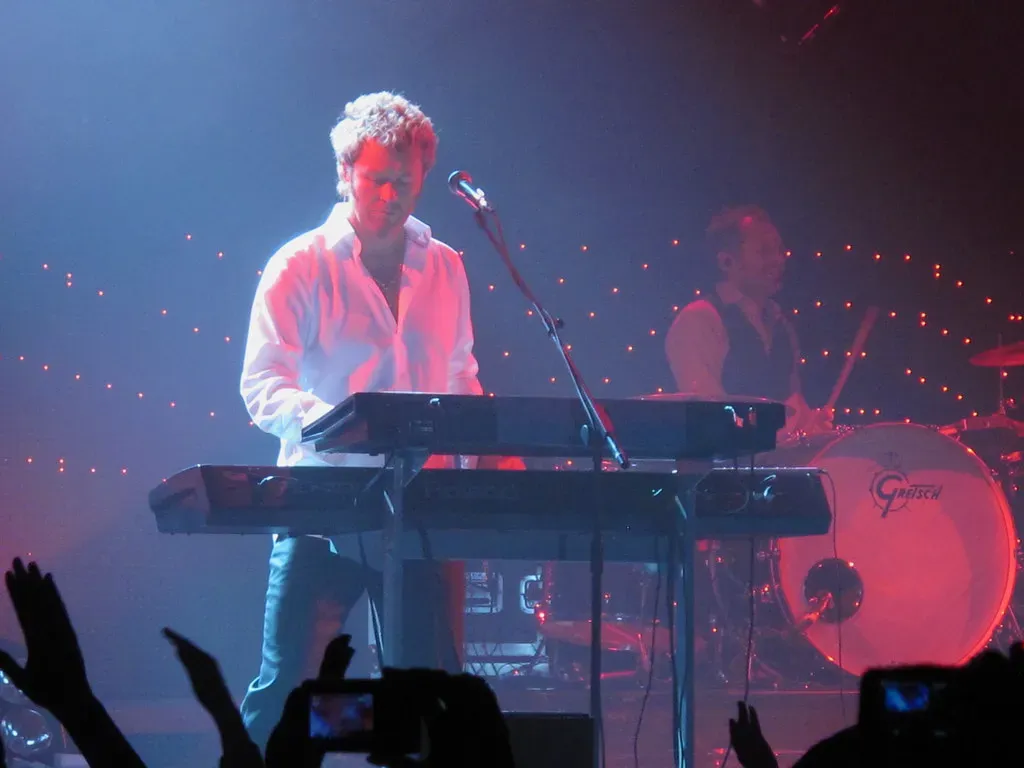
Norway isn’t a country typically associated with American chart domination, which makes a-ha’s achievement all the more remarkable. The single debuted on the Billboard Hot 100 on July 13, 1985, at number 91, climbed steadily through the fall, and finally reached number one on October 19, 1985, remaining there for one week as the commercial centerpiece of the group’s debut album, Hunting High and Low. It hit number one in its 15th week on the chart, making a-ha the first Norwegian group to top the Hot 100.
The song’s path to the top wasn’t smooth, either. It’s surprising to learn that before “Take On Me” exploded, it totally bombed, having been released three times before finally connecting with audiences. What finally pushed it over the top was the innovative rotoscope-animated music video, which won six awards and was nominated for two others at the 1986 MTV Video Music Awards. Without MTV’s willingness to give that video heavy rotation, the song might have remained a footnote rather than one of the decade’s most recognizable choruses.
Journey, “Don’t Stop Believin’” (1981)

Released on the album Escape in 1981, “Don’t Stop Believin’” wasn’t an instant chart-topper, but its slow-building piano intro and Steve Perry’s soaring vocal made it a staple of album-oriented rock radio almost immediately. It never actually hit number one on the Hot 100, yet that fact barely matters anymore given how thoroughly it has outlived nearly every song that did. Its story of small-town escape and midnight trains resonated with a generation of listeners who saw their own lives in that “streetlight people” line.
The song’s second life came decades after its original release, when it found new audiences through television, sports arenas, and karaoke bars across the world. That kind of afterlife, arguably bigger than its original chart run, is part of what makes it one of the truest measures of a song’s staying power. Few tracks from the era get sung along to as loudly, or as often, by people who weren’t even born when it first came out.
New Order, “Blue Monday” (1983)


Where most of this list leans toward glossy pop and arena rock, “Blue Monday” represents the decade’s other current: cold, electronic, and unmistakably British. Built almost entirely on sequenced synthesizers and a stark drum machine pattern, the Manchester band’s 1983 single became a blueprint for dance music that followed for decades afterward. Its detached, melancholic delivery stood in sharp contrast to the emotive vocal styles dominating American radio at the time.
The song’s influence reached far beyond the dance floors of the UK club scene where it first took hold. Its sleeve design, stark and almost industrial, became as recognizable as the track itself among collectors and design enthusiasts. “Blue Monday” proved that a song didn’t need a conventional pop structure or a warm vocal hook to become one of the defining sounds of the decade.
Bon Jovi, “Livin’ on a Prayer” (1986)

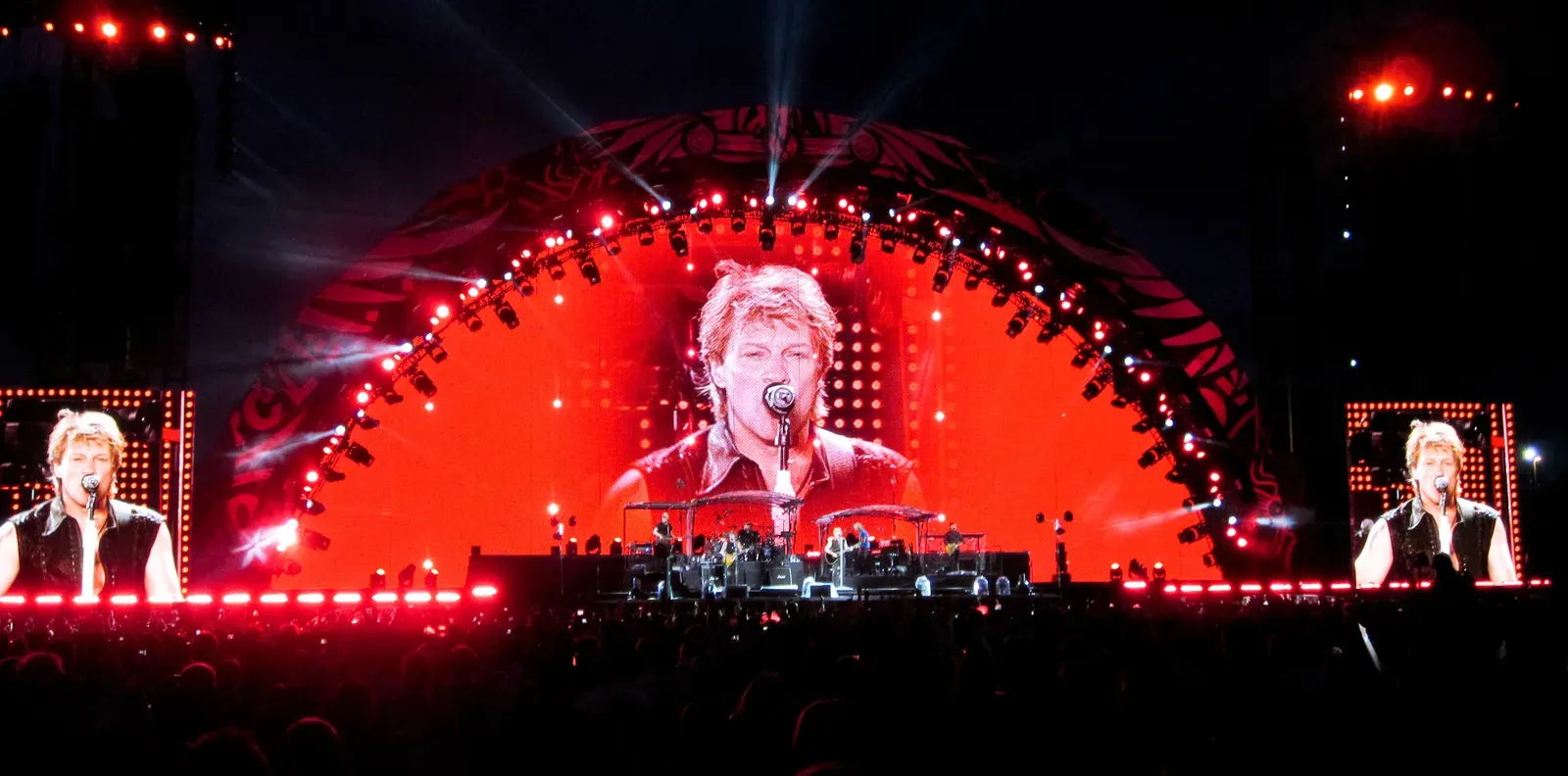
Few songs capture the working-class grit beneath eighties rock’s glossy surface quite like this one. The song, from the band’s third studio album Slippery When Wet, performed strongly on both rock and pop radio, with its music video getting heavy MTV rotation and giving Bon Jovi their first number one on the Billboard Mainstream Rock chart along with their second consecutive number one on the Hot 100. It spent four weeks at number one on the Billboard Hot 100, from February 14 to March 14, 1987.
The story of Tommy and Gina, the fictional couple at the heart of the lyrics, gave the song an emotional throughline that separated it from typical hair-metal fare. It follows a fictional couple as they try to retain their faith while struggling to make ends meet, a motivational anthem for the working class. That relatable, almost blue-collar narrative is a big part of why the song still gets belted out at weddings and ballgames decades later.
Guns N’ Roses, “Sweet Child O’ Mine” (1987)

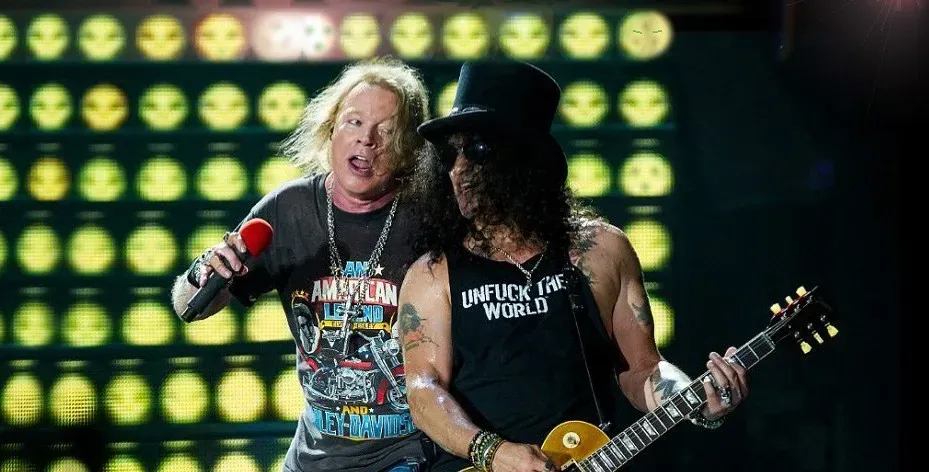
The opening riff of “Sweet Child O’ Mine” reportedly started as something close to a joke, a warm-up exercise Slash was noodling through before the rest of the band built a full song around it. Released on the band’s debut studio album Appetite for Destruction in 1987, the song was released as a single in the United States in June 1988, topping the Billboard Hot 100 and becoming the band’s only US number one single. The song remained at the top spot for two weeks before being overtaken by “Don’t Worry, Be Happy” by Bobby McFerrin.
Its road to the top wasn’t quick. Appetite came out in July 1987, and the band’s first two singles, “It’s So Easy” and “Welcome to the Jungle,” both flopped initially, though pressure from a Geffen executive got the “Welcome to the Jungle” video into late-night MTV rotation, and the video popped. That slow build eventually paid off in one of hard rock’s most enduring ballads, one that still tops “greatest guitar riff” lists nearly forty years later.
Whitney Houston, “I Wanna Dance with Somebody (Who Loves Me)” (1987)

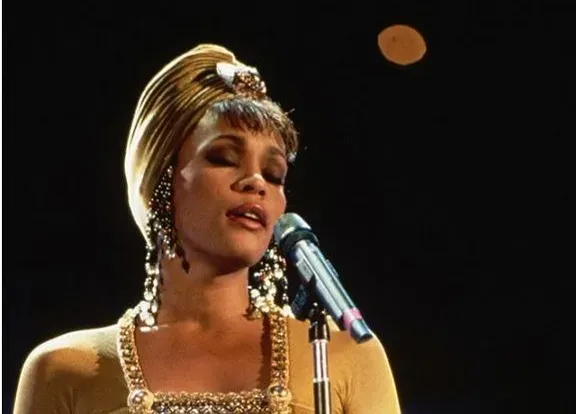
Whitney Houston had already proven she could deliver ballads with unmatched vocal power, but “I Wanna Dance with Somebody” showed she could dominate the dance floor just as convincingly. Released in 1987 as the lead single from her second album, Whitney, the song topped the Billboard Hot 100 and became one of the definitive uptempo pop anthems of the late eighties. Its joyful, propulsive production, paired with Houston’s effortless range, made it a staple of dance floors and radio playlists that has never really faded.
The track also marked a turning point for Houston as an artist capable of crossing genres without losing her identifiable vocal signature. It bridged the gap between the soul traditions she came from and the synth-driven pop dominating the charts at the time. Nearly four decades on, it remains one of the most instantly recognizable songs of the entire decade, regularly resurfacing in films, commercials, and karaoke nights around the world.
These ten songs didn’t just top charts in their moment. They shaped the sound of MTV, defined how artists marketed themselves visually, and set templates, from synth-driven balladry to stadium rock anthems, that later generations of musicians would keep borrowing from. Listening to them today, out of context and decades removed from the big hair and shoulder pads, what stands out most is how well most of them still hold up as pure songwriting.